
How Fast Can Electric Bikes Go?
Jessica Bird | Tuesday 30th June 2026 8:00am
With more of us thinking about cheaper, cleaner, and more flexible ways to get around, it’s no surprise that electric bikes are getting a lot of attention. Electric cars are becoming more common, but they’re still a big investment for many drivers – especially if you’re not quite ready to make the switch, or you don’t need a car for every journey.
That’s where electric two-wheelers come in. But when people ask, “How fast can electric bikes go?”, the answer depends on what you mean. Are we talking about electric motorbikes and scooters, or electric bicycles?
Let’s look at both.
Electric motorbikes and motor scooters
Electric motorbikes and scooters are probably the closest two-wheeled alternative to electric cars. They’re usually cheaper to buy, cheaper to run, and easier to park than a car, so they can make a lot of sense for short commutes, city riding, and everyday errands.
Like electric cars, electric motorbikes use a battery and an electric motor rather than a petrol engine. If you’re curious about the basics, we’ve got a simple guide to how electric cars work, and the principle is similar: stored battery power is used to drive an electric motor, which moves the vehicle.
The challenge is that batteries are heavy. That matters for cars, and it matters even more when you’re trying to keep a motorbike light, nimble, and practical. Some electric motorbikes can reach motorway speeds, and models like the RGNT No.1 Scrambler SE show just how stylish electric riding can be. But range, charging time, price, and practicality still vary a lot depending on the bike.
That doesn’t mean electric motorbikes aren’t useful. For shorter journeys, they can be brilliant. But they’re not always a like-for-like replacement for a car, especially if you regularly cover long distances. If range is your main concern, it’s worth comparing them with the EV cars with the longest range, or reading up on common EV questions, like whether all electric cars are automatic.
E-bikes
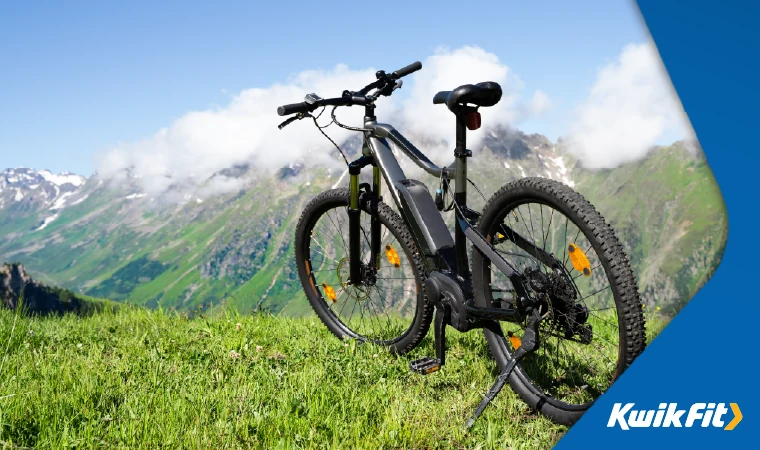
Electric bicycles, or e-bikes, are a different thing altogether. They’re not really designed to replace a car for every journey. They’re there to make cycling easier, more accessible, and, let’s be honest, a bit less sweaty.
A road-legal e-bike in the UK is usually classed as an Electrically Assisted Pedal Cycle, or EAPC. In simple terms, that means it’s a bicycle with a small electric motor that helps while you pedal. You still ride it like a normal bike, but the motor gives you a boost when you’re setting off, climbing hills, battling headwinds, or carrying a bit of extra weight.
That’s why e-bikes are so popular with commuters, older riders, leisure cyclists, and anyone who likes the idea of cycling but doesn’t necessarily want every journey to feel like a workout. They’re especially handy in towns and cities, where short trips by car can be slow, expensive, and awkward to park.
Because a compliant e-bike is treated like a normal pedal cycle, you don’t need vehicle tax, a driving licence, registration, or motor insurance to ride one. You can also use cycle lanes and cycle paths where bicycles are allowed. As with any bike, though, you’ll still want to ride sensibly, maintain it properly, and keep an eye on the rules of the road.
How fast can e-bikes legally go?
Here’s the key bit: in the UK, the electric assistance on a road-legal e-bike must cut out when the bike reaches 15.5 mph. The motor also needs to have a maximum continuous rated power output of 250W, and the bike must have pedals that can be used to propel it.
That doesn’t mean the bike physically can’t go faster than 15.5 mph. It means the motor can’t keep helping you beyond that point. Once you’re above the assisted limit, it’s down to your legs, gravity, and the road conditions – just like it would be on a normal bicycle.
So, on the flat, many riders will cruise somewhere around the assisted limit. Going downhill, an e-bike can go faster, sometimes much faster, but that doesn’t mean you should treat it like a motorbike. You’re still exposed, you still need space to stop, and you still need to ride for the conditions.
That last point is important. Extra weight from the motor and battery can affect how a bike handles, especially when braking or cornering. If you already drive, you’ll know how much speed, road surface, tyres, brakes, and reaction time can affect safety. The same thinking applies on two wheels, and our guide to what affects your stopping distance is well worth a read.
What if an e-bike goes faster than the legal limit?
If an electric bike doesn’t meet EAPC rules, it may be treated as a moped or motorbike instead. That can mean it needs approval, registration, insurance, tax, and the right licence. It may also need a number plate, and you may not be allowed to use it on cycle paths.
That’s why it’s worth being careful with high-powered e-bikes, imported models, and conversion kits. Some are perfectly legal, but others can fall outside the rules. If you’re buying one, check the specifications properly before you ride it on the road.
The same goes for throttle-controlled bikes. Some e-bikes can have a throttle and still be legal, but the details matter. If in doubt, check before you buy, and don’t assume every bike advertised online is legal for UK roads.
E-bikes still need proper maintenance
E-bikes can make cycling easier, but they still need the same basic care as any other bike. Tyres need to be inflated correctly, brakes need to be responsive, gears need to shift cleanly, and chains, cables, wheels, and bearings all need attention over time.
The electric parts also make regular checks even more important. A heavy e-bike with tired brakes, underinflated tyres, or loose components won’t feel good to ride, and it won’t stop as well as it should. If you drive too, it’s the same kind of thinking as keeping your car’s tyres, brakes, and tyre pressures in good shape. Regular checks can improve safety, performance, and running costs – whether you’re on four wheels or two. Our guides on tyre pressure, UK tyre law, and tyre checks are useful places to start.
Need your e-bike serviced?
We’ve teamed up with the bike experts at Fettle to offer bicycle and e-bike repairs and servicing at select Kwik Fit centres. So, whether your e-bike needs a tune-up, your brakes feel a bit soft, your gears are slipping, or you just want someone to give everything a proper once-over, we can help.
You can learn more about our bike repair and servicing, or use our centre locator to find your nearest participating location.
And while you’re here, take a look through our Kwik Fit guides and blog for more useful advice on cars, tyres, electric vehicles, and road safety — from EV tyres and EV batteries to speed limiters.
Need a hand? Get in touch, or find your nearest Kwik Fit centre today.


Any facts, figures and prices shown in our blog articles are correct at time of publication.
Featured Articles
Is it Illegal to Drive With One Headlight?
Saturday 19th July 2025
Wondering if it’s illegal to drive with one headlight? Learn about the safety risks and penalties of illegal blown bulbs and why you should fix them promptly.
Air Con in EVs & Hybrids: Experts Answer Your Questions
Monday 30th June 2025
Does air con drain EV batteries? Can you use the air con while charging an electric car? Find out the answers to these questions & more from Kwik Fit’s experts.
Why Is Your Car Making a Noise? Fixes & Tips
Friday 13th June 2025
When your car starts making unexpected noises, it can certainly be quite disconcerting; it may be nothing to worry about, but here’s what you need to know.